Retirement Reimagined

Setting out on the next phase of life…

Our Time Zone Adjustment in Istanbul

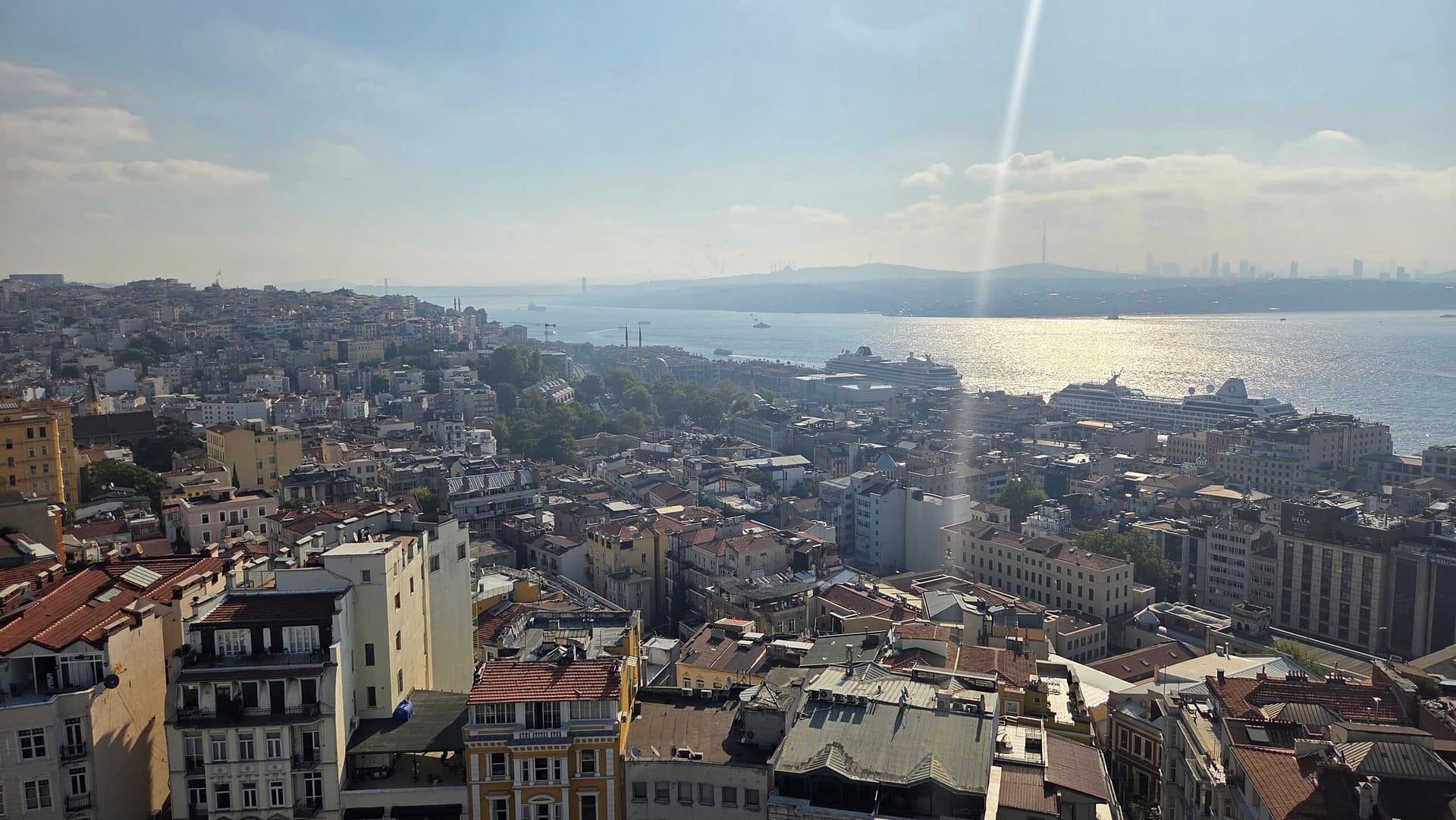
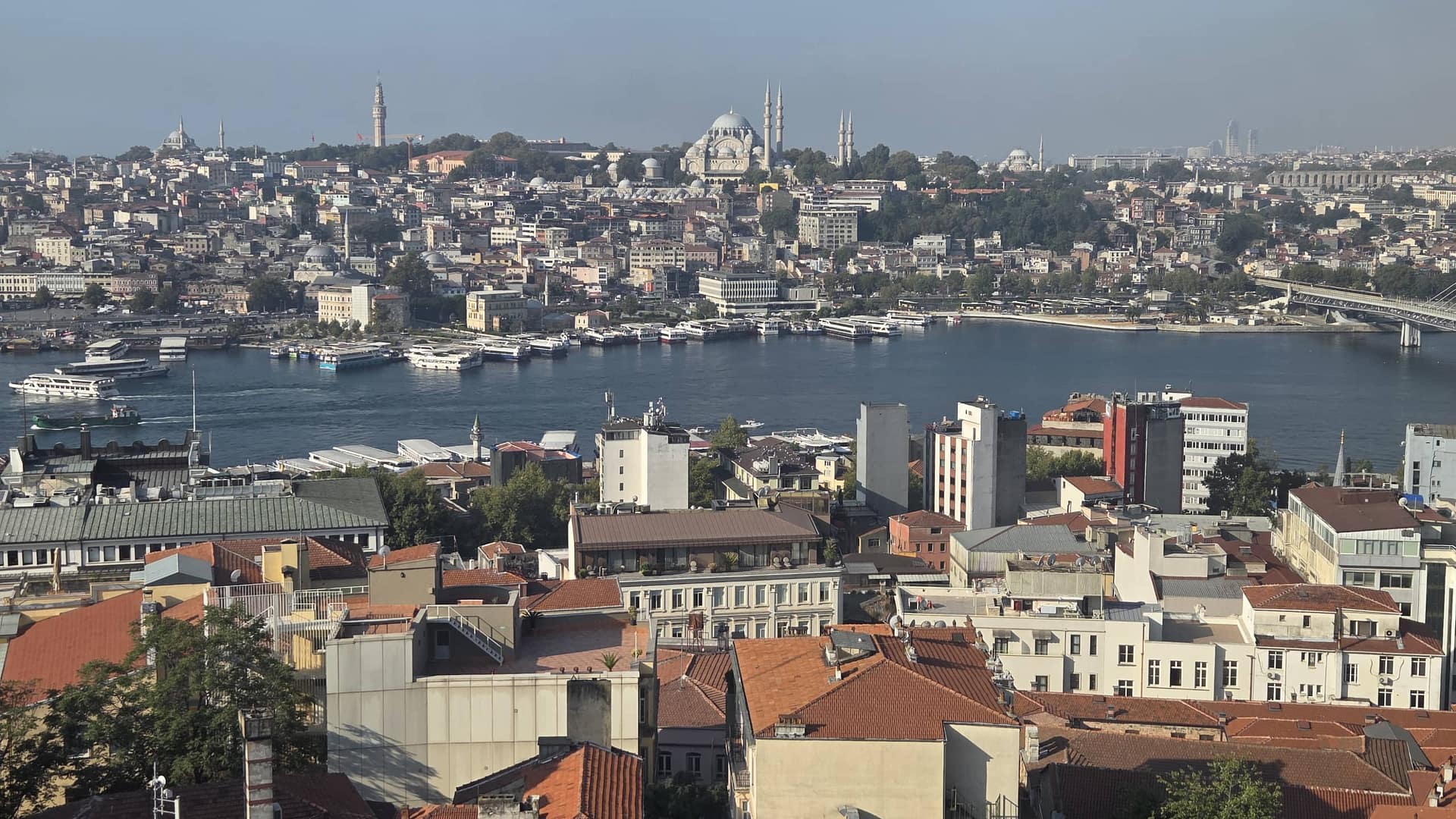
View of Istanbul (Sultanahmet) from Galata Tower

After dropping DJ off in Shanghai, we needed a way to get closer to the time zone of Europe without starting the Schengen Zone clock, as we would need the full 90 days allowed for our Camino walk — so not Europe. We had strongly considered Dubai but then Trump started his stupid war in the region so that was out of the question. Istanbul was the next best fit.

An old colleague of Hillary’s had spent years living in Turkey but beyond that we knew next to nothing about the city. So we we had been researching what to do in Istanbul since before we left Virginia back in June. Frankly, it was a bit overwhelming, so we decided to try to collect all the items we might like to see and then group them around different neighborhoods. We focused on the area near our Airbnb – Galata and Karaköy, the Sultanahmet area around Hagia Sophia, Fener to Fatih, Kadıköy and Moda, and then broadly a trip up the Bosphorus.

Istanbul was not at all what we expected. To be honest, we had very little idea of what to expect, but during our layover between Shanghai and Europe we had 8 full days to explore. What we found was a chaotic city full of history, food around every corner, a layered transportation system, and cats, lots of cats.

Sightseeing in Istanbul

It’s a bit impractical to write about everything we saw in Istanbul. There really are sights, and history, and food, around every corner. The highlights of our sightseeing in Istanbul included both cisterns, tons of mosques, and exploration along the Golden Horn and Bosphorus Strait.

Cistern of Theodosius and Basilica Cistern

It turns out there were a great number of cisterns built by the Byzantines and the Romans, many of which are still in existence. The two cisterns we visited are the Cistern of Theodosius and the Basilica Cistern, both centrally located in Sultanahmet near the Hagia Sophia and The Blue Mosque. 

The former, is far less expensive and less crowded. Had we only visited it we would have been perfectly happy. The cistern was beautiful, easy to get into, and fascinating. Inside it was cool and refreshing and had few visitors and no line. At ₺900 ($18.60) it was quite reasonable. 

We also visited the Basilica Cistern though at ₺2500 (~$46.50/person). This price was somewhat jaw dropping, though once we got inside it made sense to some degree. The Basilica Cistern is much larger, probably double the size, and features columns of a variety of styles as it has expanded over the years. It was also rather humid and stuffy with far more people shuffling their way through. We were quite happy we visited but probably still liked the Cistern of Theodosius better.

Selfie in Basilica Cistern

Mosques Are a Constant Backdrop to Istanbul

If there were any doubt about Turkey being a Muslim country, one need only hear the call to prayer emanating eerily (to us) through loudspeakers across every neighborhood. This happens five times a day starting at roughly 5:15 in the morning.

Pretty much anywhere you go in Istanbul you will find a mosque. They come in a variety of sizes. Some were built as early as the 1400’s and others as recently as the 2020’s. In some cases, like the Hagia Sophia, they occupy a site that has supported churches, mosques, museums, and back to mosques.

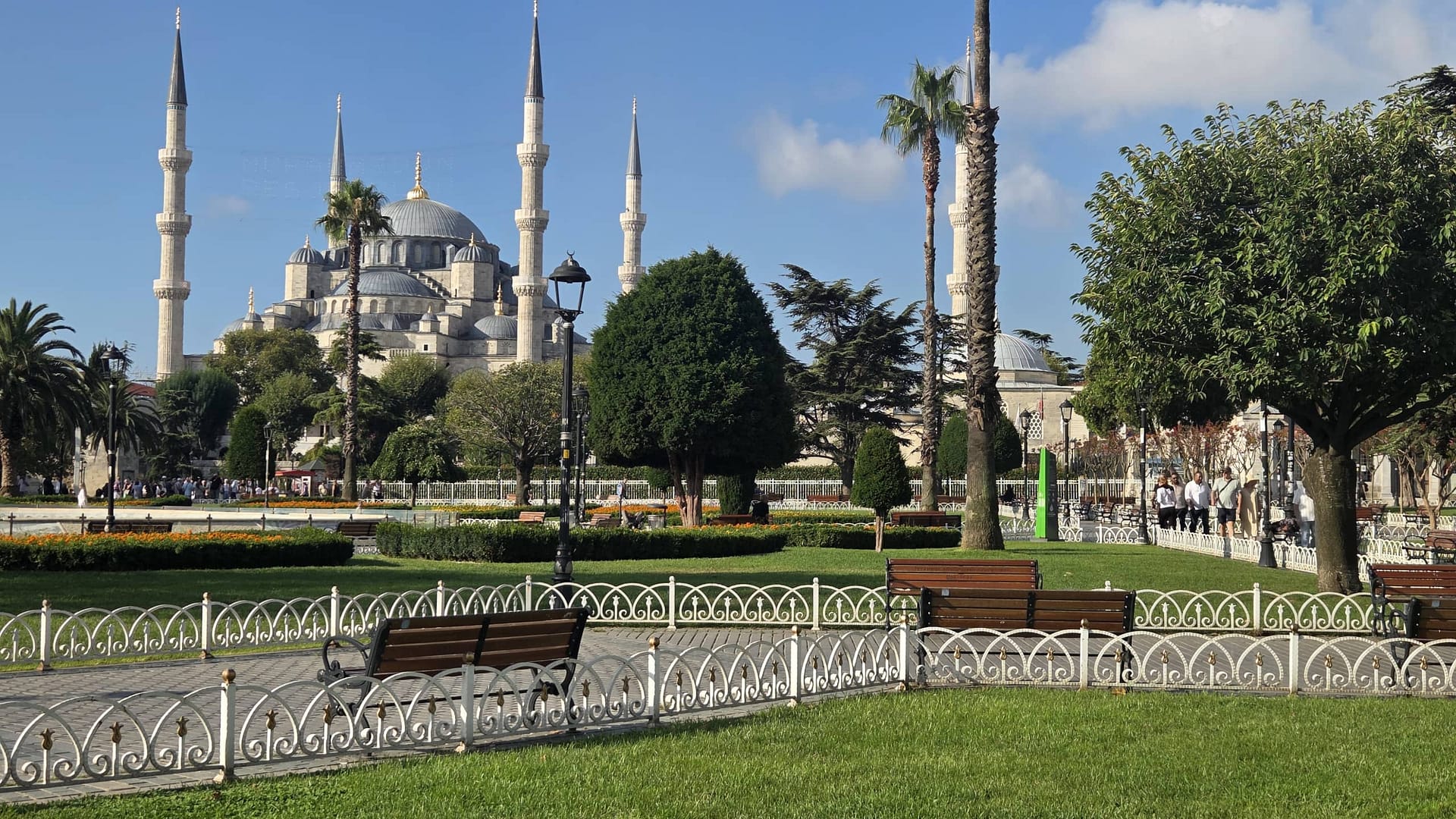
Blue Mosque
Blue Mosque
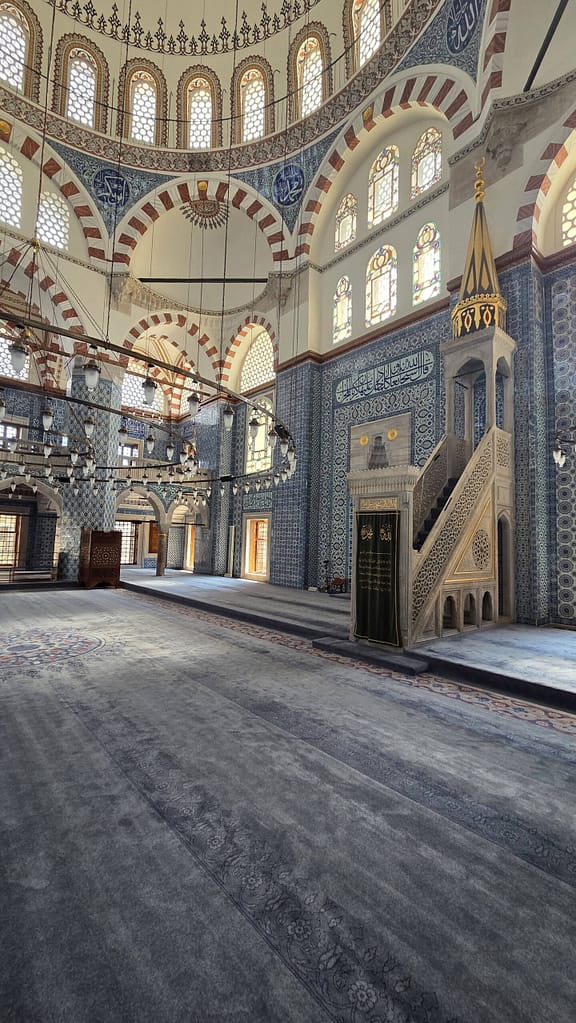
Rüstem Pasha Mosque

We very much enjoyed visiting them, despite the fact that I needed to wear pants, and Hillary needed both a dress (or pants) and head scarf. Most mosques will provide a covering for your knees (kind of a potato sack thing) and a head scarf free to visitors who lack them.

Each mosque was beautifully adorned, from the soft carpet that felt wonderful to walk on (shoes must be taken off) to the ornately decorated domes and everything in between.

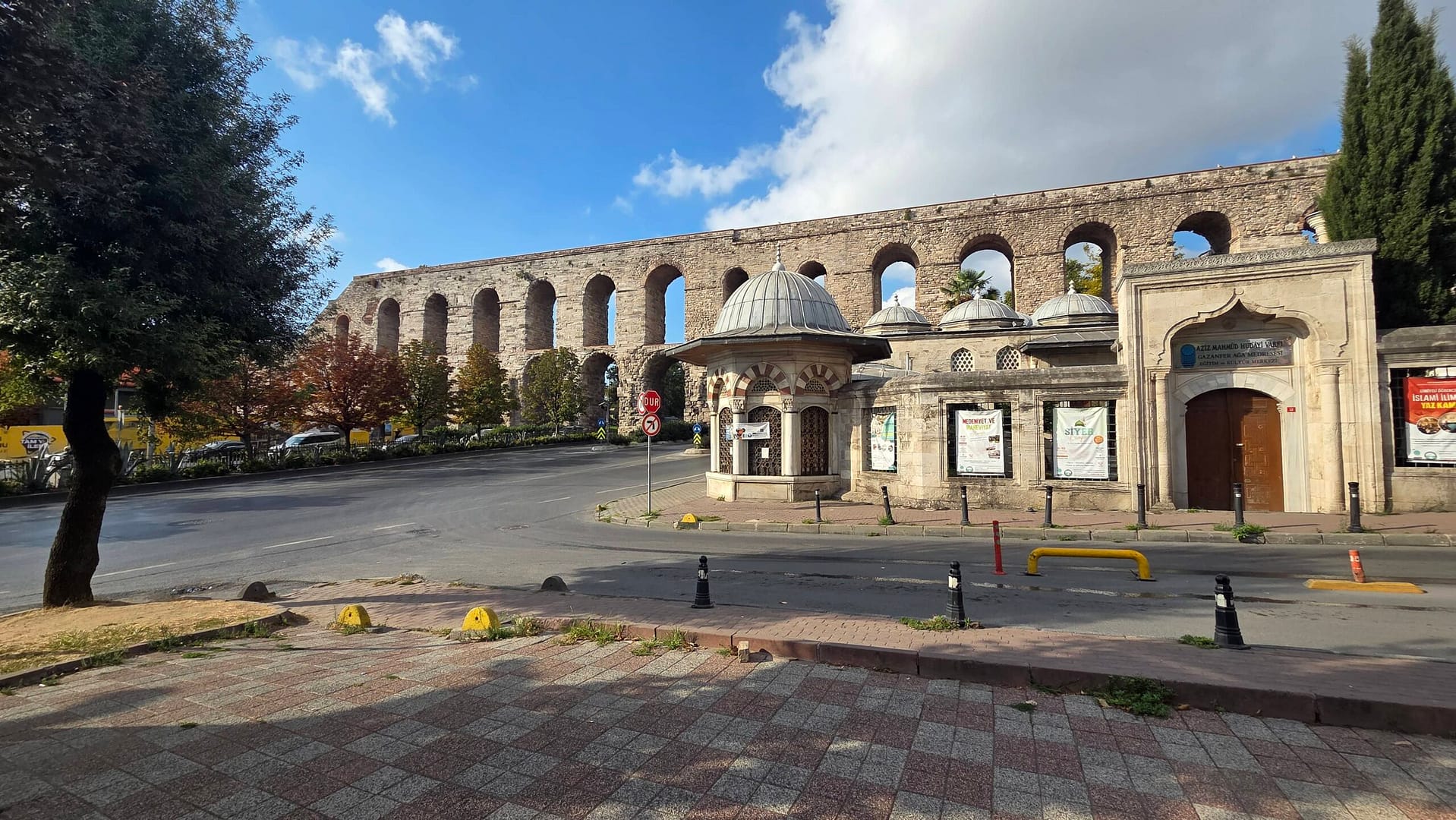
We visited a number of mosques including The Blue Mosque and Hagia Sophia which recently transitioned from museum back to mosque. Our favorite, however, was the Fatih Mosque. Seemingly equal in size to The Blue Mosque, this one is situated a bit to the west near an old Roman aqueduct. It appears to have far fewer tourists visiting, though is equally well adorned throughout.

If you look at virtually any photo of Istanbul, and indeed if you look in any direction along the Golden Horn or Bosphorus Strait, you will note a minarete poking out of the skyline, often dozens of them dotting the hillside on all sides.

See my related post on the beautiful mosques of Istanbul which is more of a visual post with photos of many of the mosques we saw and/or visited during our time here.

The Golden Horn and Bosphorus Strait

Lest we forget to say it, a major part of Istanbul is the water. When you visit it becomes apparent just why the city became so successful and was so heavily fought over for hundreds of years. It straddles Europe and Asia, but more than this it sits at a perfect intersection of waterways. Specifically, it sits between the Sea of Marmara, a gateway to the Mediterranean to the south, and the Black Sea to the north, connected by the Bosphorus Strait. This straight is wide enough for large cargo ships transporting resources around the world, yet small enough that the waterway is easily controlled. 

View from Galata Tower to the Bosphorus

Indeed, even before the Ottoman Empire took hold, the waterway was blocked by a large chain across the entire waterway, forcing transiting ships to pay taxes for access and providing significant protection. Likewise, the Golden Horn, which splits off in the middle of Istanbul provides shelter to ships during storms, repair facilities, and access to traders. It too was protected, even before the Ottoman Empire by a large chain that blocked entry.

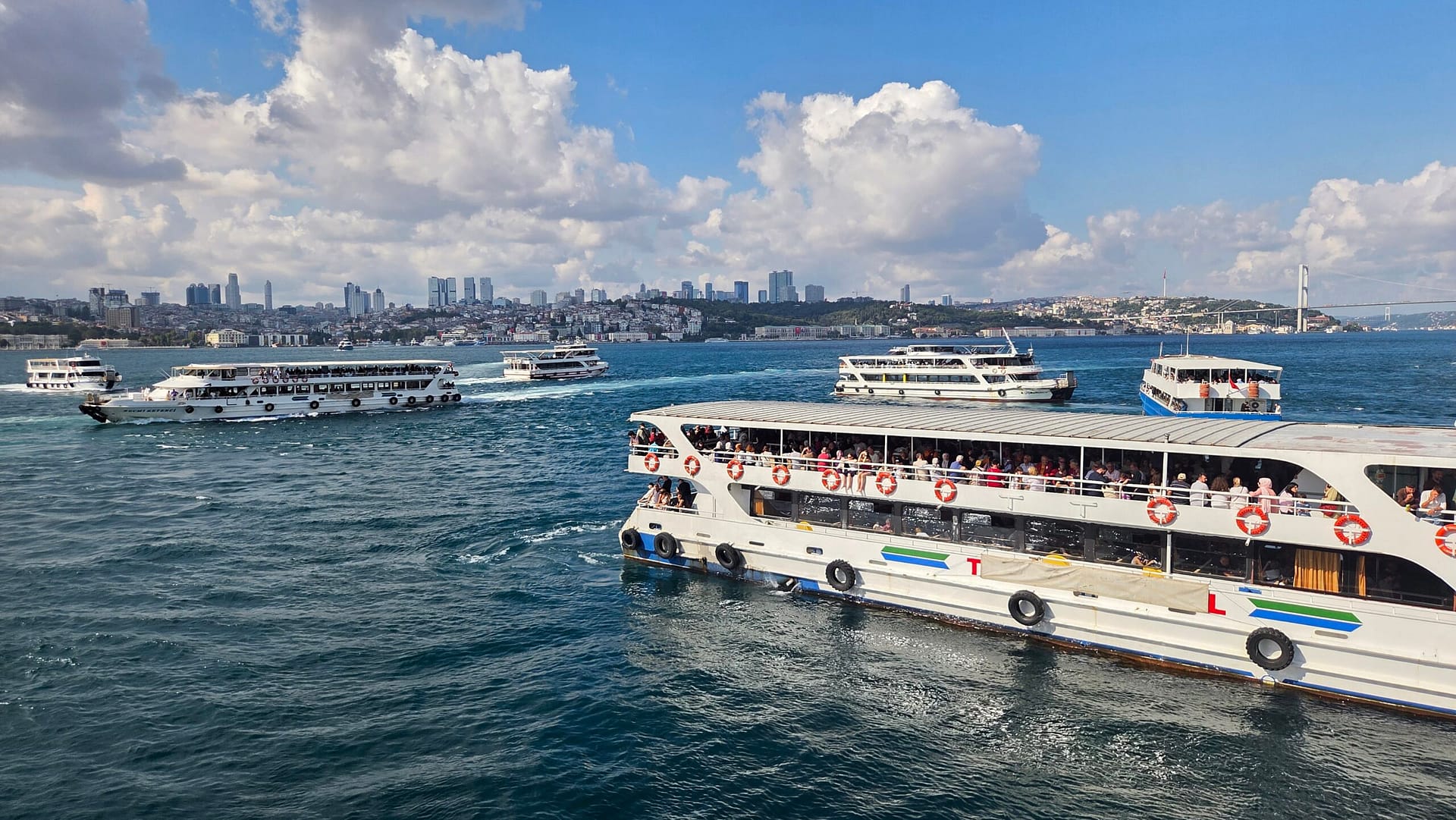
In modern Istanbul the water is a major impact to the culture. Food and trade is facilitated by this waterway and myriad ferries take passengers up and down both. While it is possible to cross from the European side to the Asian side without ferries it seems most people prefer them for daily commutes or even for going shopping or dining. 

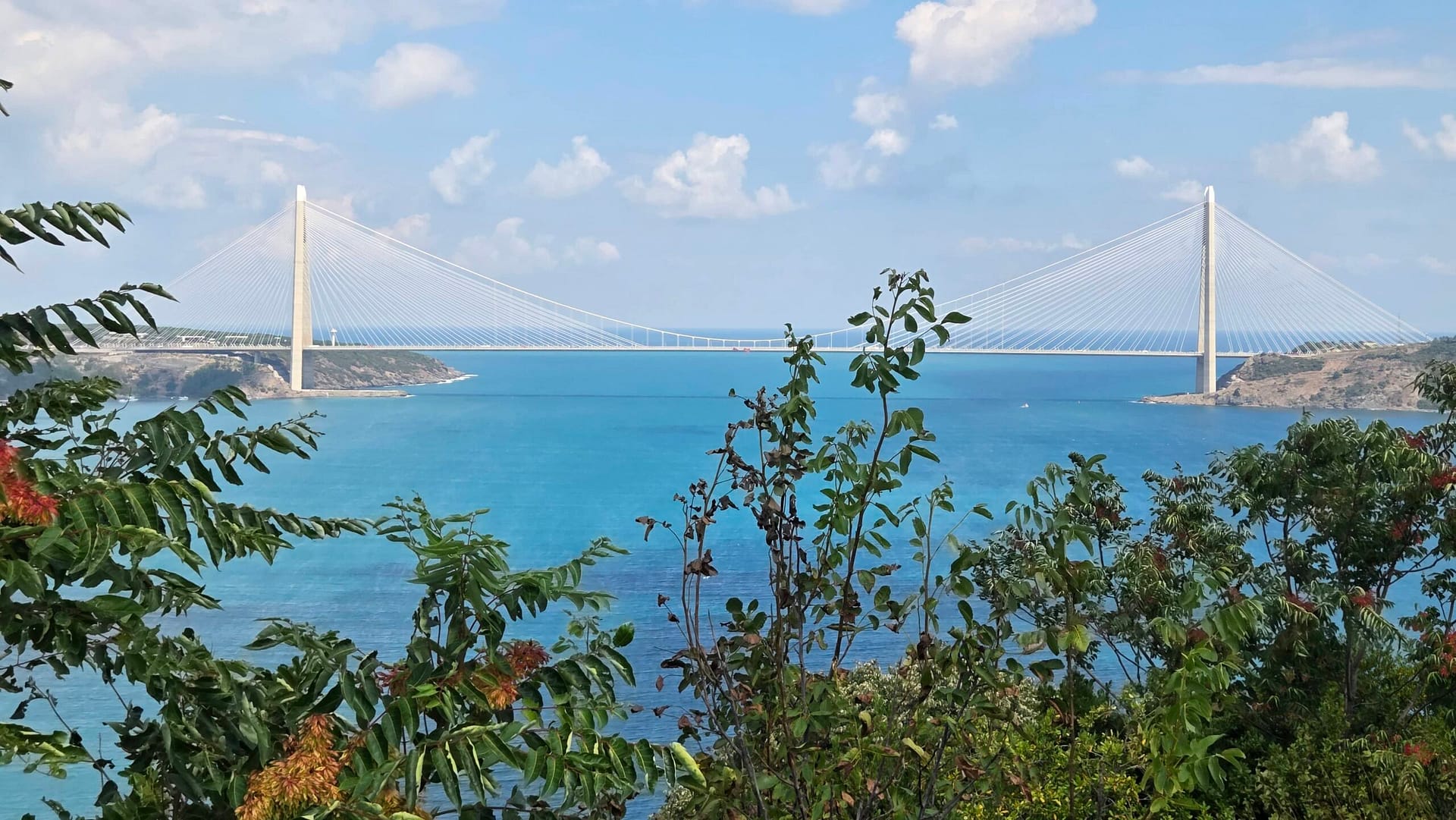
Looking north to The Black Sea from the top of the Bosphorus Strait

We crossed both the Golden Horn and the Bosphorus routinely during our time in the city. We also took a full day for a long Bosphorus tour on the government ferry, traveling from Eminönü to Anadolu Kavağı on the edge of the Black Sea. The tour stopped a few times as it headed up the Bosphorus before depositing us for a three hour break in Anadolu Kavağı where we climbed a hillside to a ancient castle and view of the Black Sea plus a wonderful lunch, seaside, at the port.

Likewise, one afternoon, after exploring Pierre Lotti Hill at the top of the Golden Horn we took the ferry back to Karaköy. This ferry criss crosses the Golden Horn repeatedly allowing for close up views of each port along its length.

We Ate Very Well in Istanbul

More than virtually any other city we’ve been to, Istanbul is a city built on food. It is everywhere and in so many forms. From amazing waterfront restaurants, to local restaurants in every neighborhood, to the fresh dates and figs available in the grocery store. 

While we likely would have stumbled upon many of the things Istanbul is known for, we decided to take inspiration from Nomad Mania in addition to joining Culinary Backstreets for a full day food tour.

Nomad Mania often highlights particular foods for a region, though normally it is only one or two. For Istanbul, however, it was eight different foods! We tried to go after them all and managed to hit all but one.

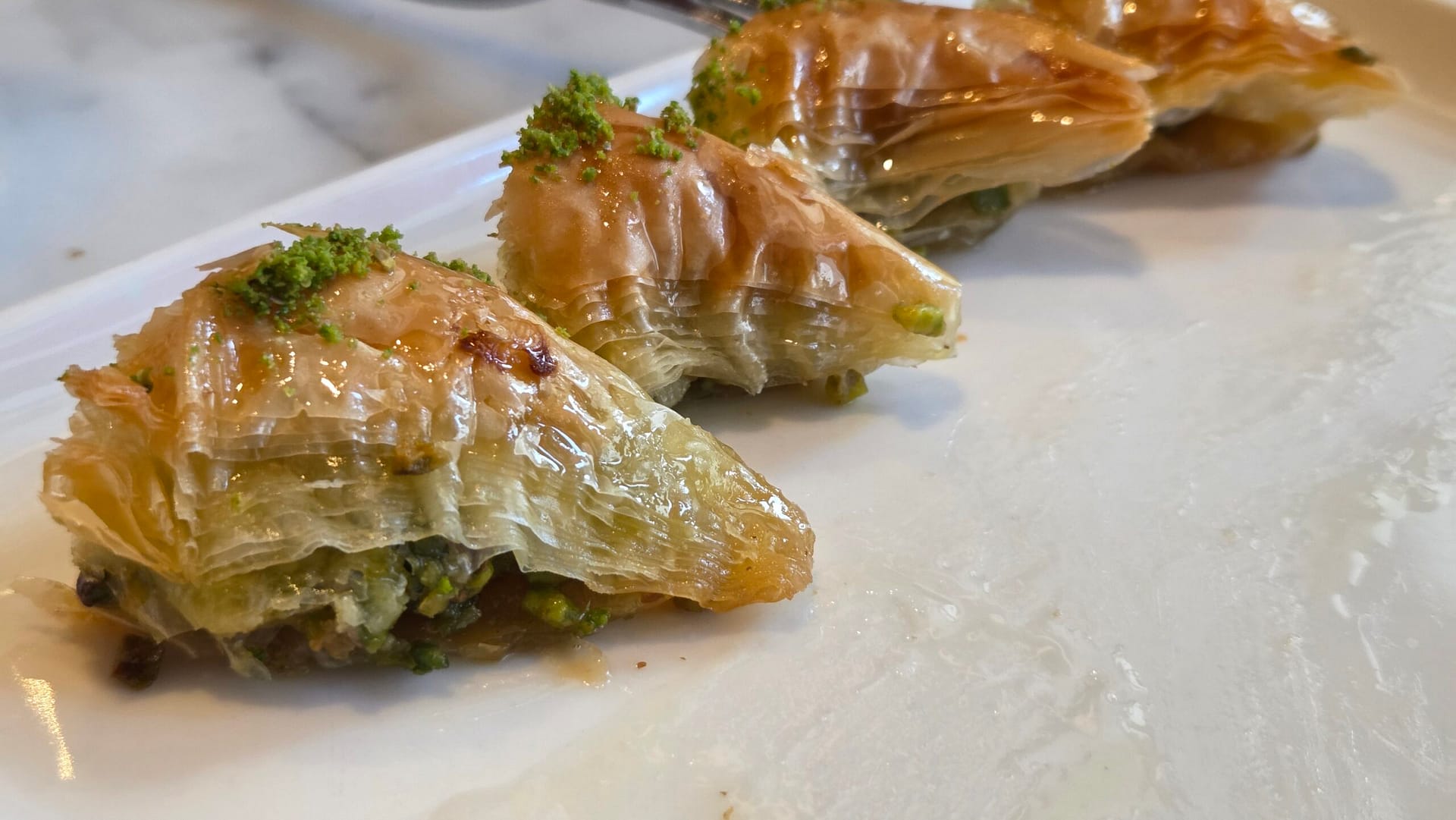
Culinary Backstreets Tour - Baklava at Güllüoğlu
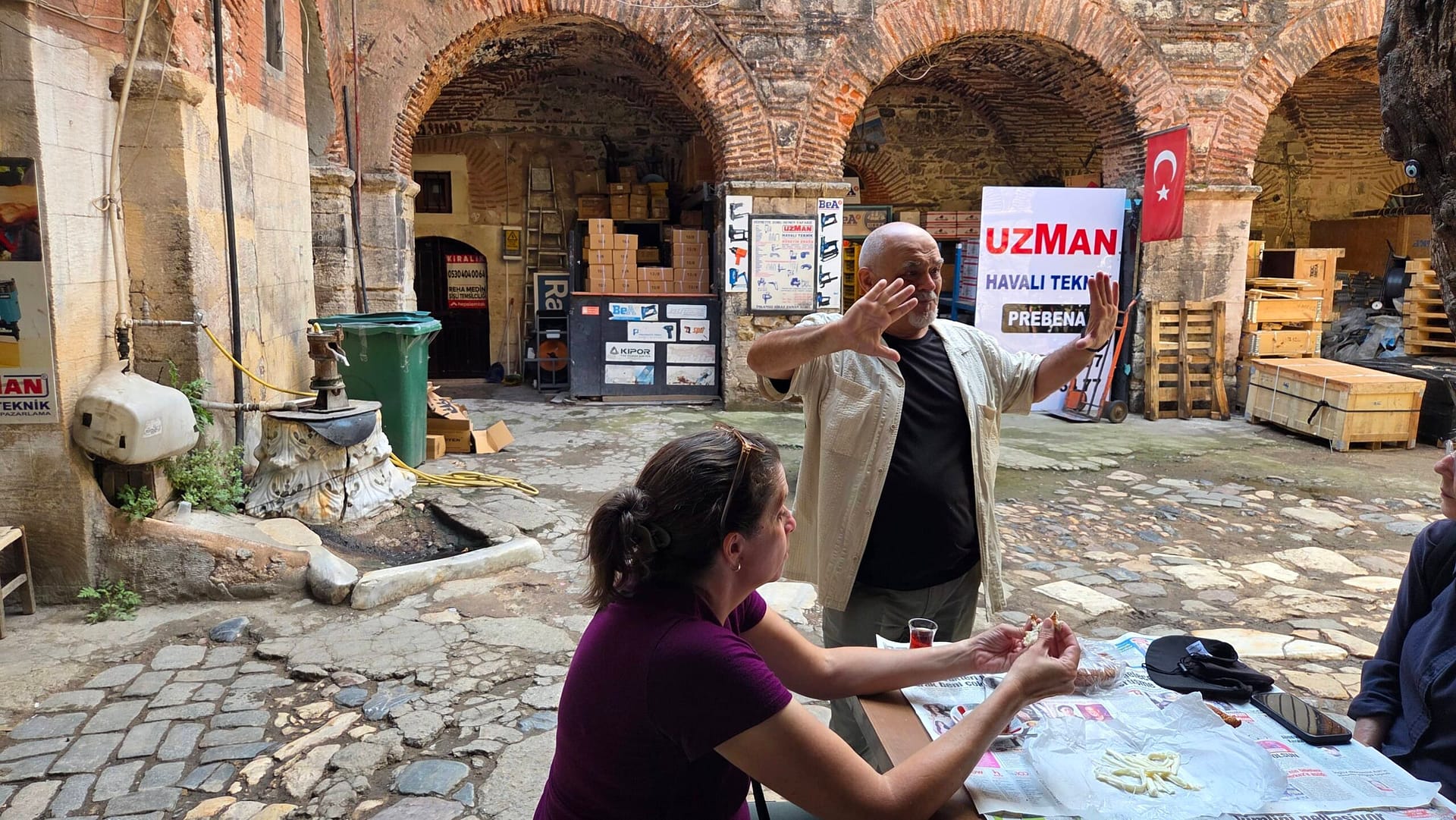
Culinary Backstreets Tour in Old Hardware Store

During our Culinary Backstreets Tour, Two Markets, Two Continents, we spent about six and a half hours split between Karaköy and Kadıköy. Our guide shared history as we walked from one spot to another trying food along the way from the ubiquitous simit (circular sesame covered bread) sold from carts on every street, to fish, baklava, and meats, and nuts.

On top of all of these we found historic businesses offering fermented yogurt drinks, Turkish Delight, and Turkish Ice Cream – a surprisingly thick/gummy ice cream that manages to resist melting in the summer heat. 

I suppose I should mention that we did try Turkish Tea (of course) made from leaves grown in Turkey, and Turkish Coffee – a small, strong, cup of coffee with the grounds sitting in the bottom of the cup.

We even tried Rakı, a deeply licorice flavored liquor famous in Turkey that is served as a shot mixed with water and delicious with a cheese chaser.

Architecture - Builders Must Go Crazy

Ancient Ship Repair Building Turned Artisan Worshops

Istanbul is at once a modern city, a city of decay, and a city of history. It would seem to be a nightmare to be a developer in the city. Thousand year old ruins dot the landscape. Ancient walls, buildings, streets, and temples cover every square inch. Just digging anywhere in Istanbul is likely to unearth artifacts that would likely turn your building site into an decades long excavation.

This is probably why any given block may having gleaming new construction, hollowed out shells of buildings, random holes in the ground, and narrow cobblestone streets. I even wonder if this is why the metro system seemingly is deeper than any other in the world – so the tunnel boring machines are deep enough to avoid churning through history.

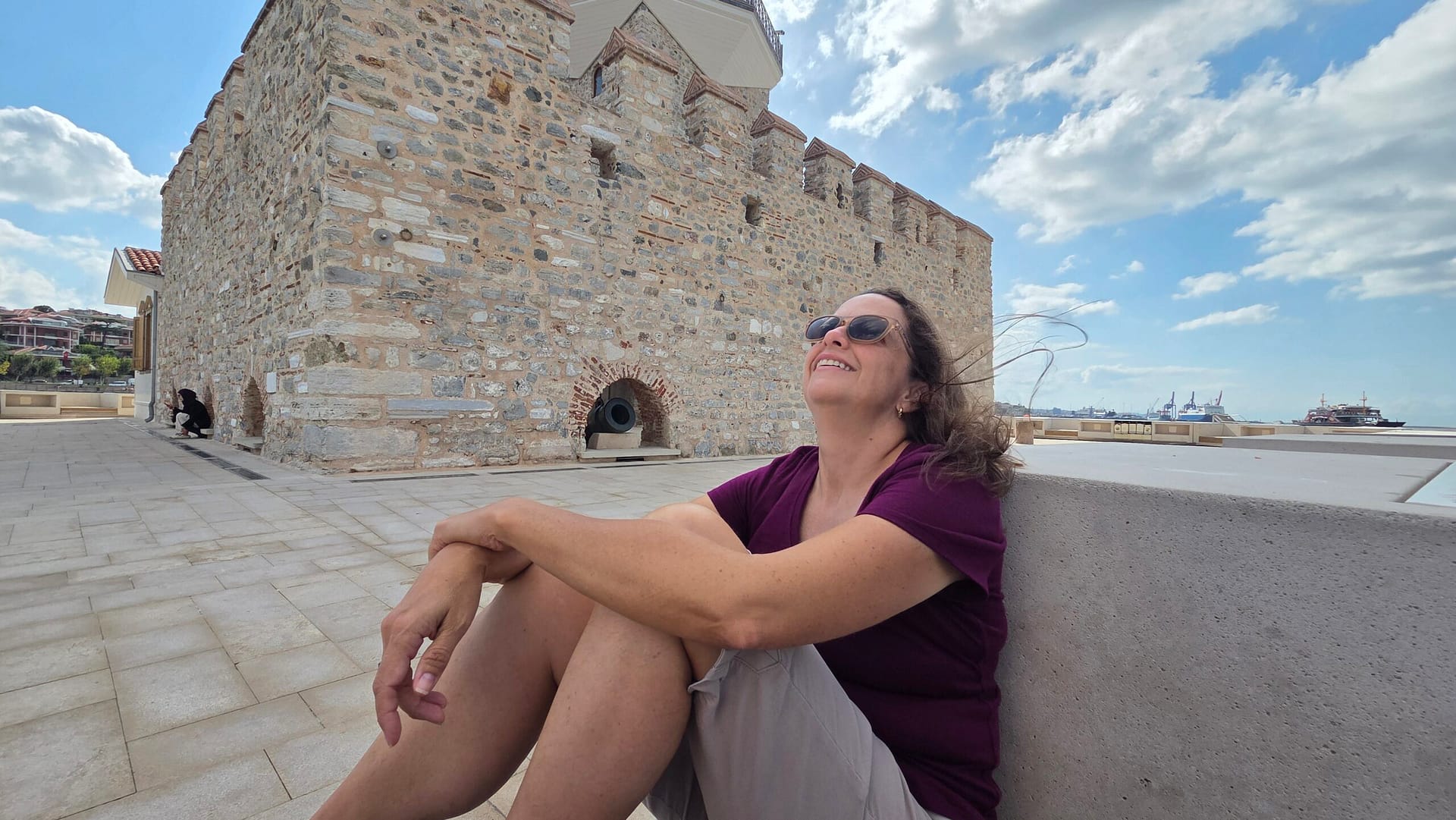
We explored the architecture in many parts of the city including Dolmabahçe Palace which nearly bankrupted the Ottoman Empire, Maidens Tower which served as lookout, taxing agency and anchor for a chain across the Bosphoros, and Galata Tower which was built as a Genoa lookout tower overlooking both the Bosphorus and Golden Horn. 

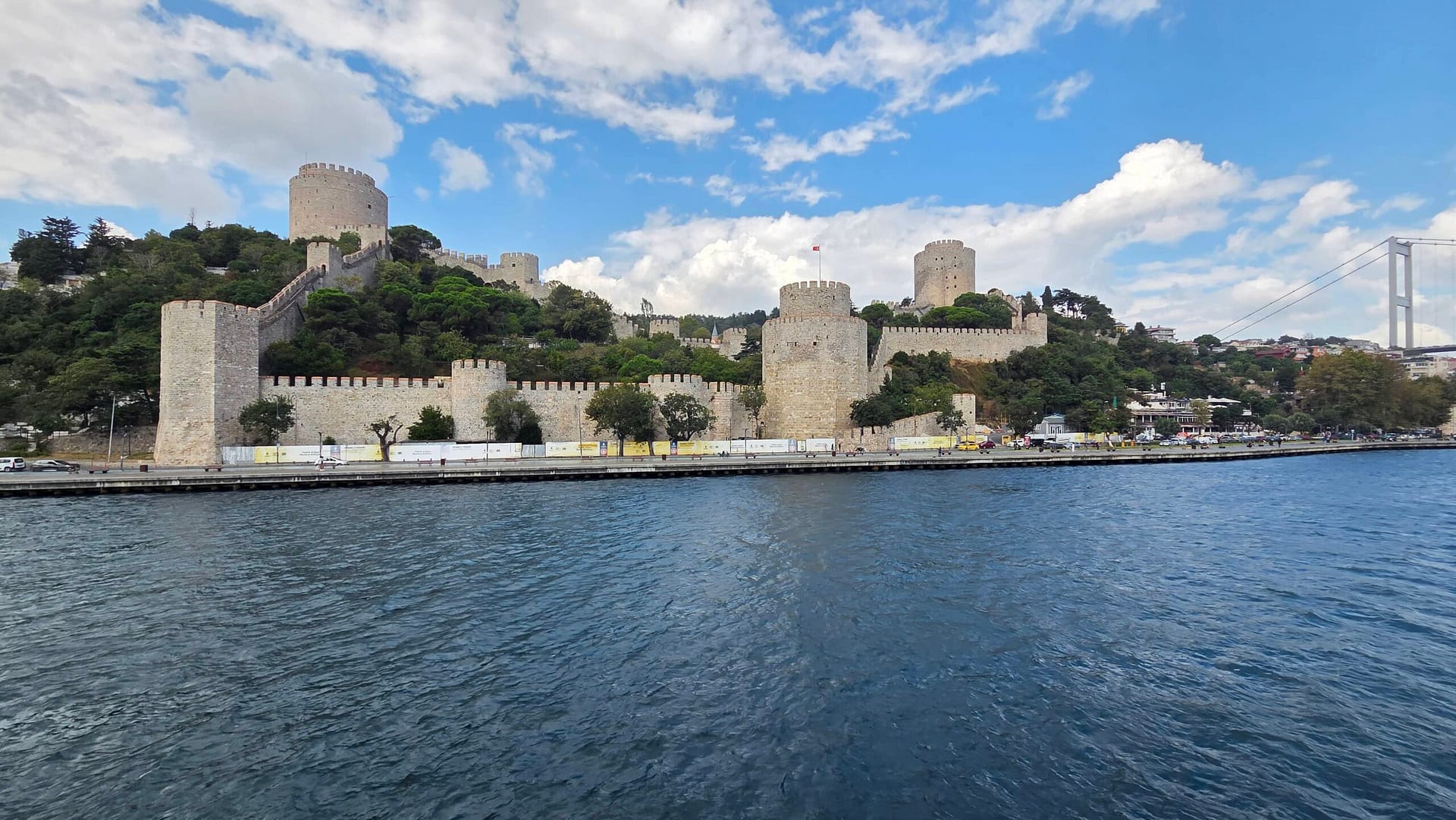
Unfortunately we didn’t get to cover everything I wanted, most of all Rumeli Fortress, about halfway up the Bosphorus. There just wasn’t time to hit everything.

Roman Aqueduct in Fatih
Rumeli Fortress
Rumeli Fortess - As Viewed from our Long Bosphorus Tour

Cats Rule Istanbul

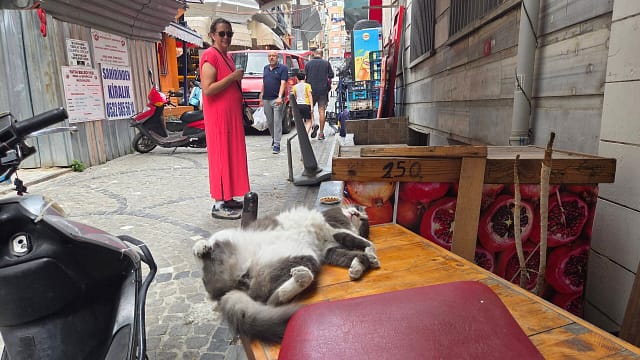
I have to admit I love cats, though I’m not fond of the day to day maintenance of taking care of them. As it turns out, Istanbul is really perfect for someone like me. There are thousands of cats all over the city. They wander freely amongst the businesses, restaurants, temples, museums, subway, funiculars, and everywhere else. They are, by and large, quite friendly. The government spays and neuters them, notching their ear when they have done so, and people across the city feed them and create makeshift shelters for them.

I had a lot of fun taking pictures of many of the cats we came across. What’s more I loved having cats come up for attention while we were eating at a restaurant or simply hanging out somewhere. If for no other reason, I’d love to come back to Istanbul just to spend more time visiting with the cats.

As with the Mosques of Istanbul, I have a separate post, mainly photos, featuring just a few of the cats we came across in Istanbul including on an upper floor of Hagia Sophia.

Sprawled out in Fener

A Highly Layered, Integrated, Transportation System

Ferry Traffic at Üsküdar

Like any big city, Istanbul has a substantial transportation network. However, this city has even more layers to the network, all of which is accessible with the Istanbulkart, their tap and go payment card. This layered network is great too, since so many of the streets are narrow, blocked by delivery trucks or cars simply parked in the street. Driving or taking a taxi is often much slower than public transit options.

Istanbul Airport, far outside the city, is connected by the M11 underground subway; a line that stretches 69 km end to end, with the airport right in the middle.

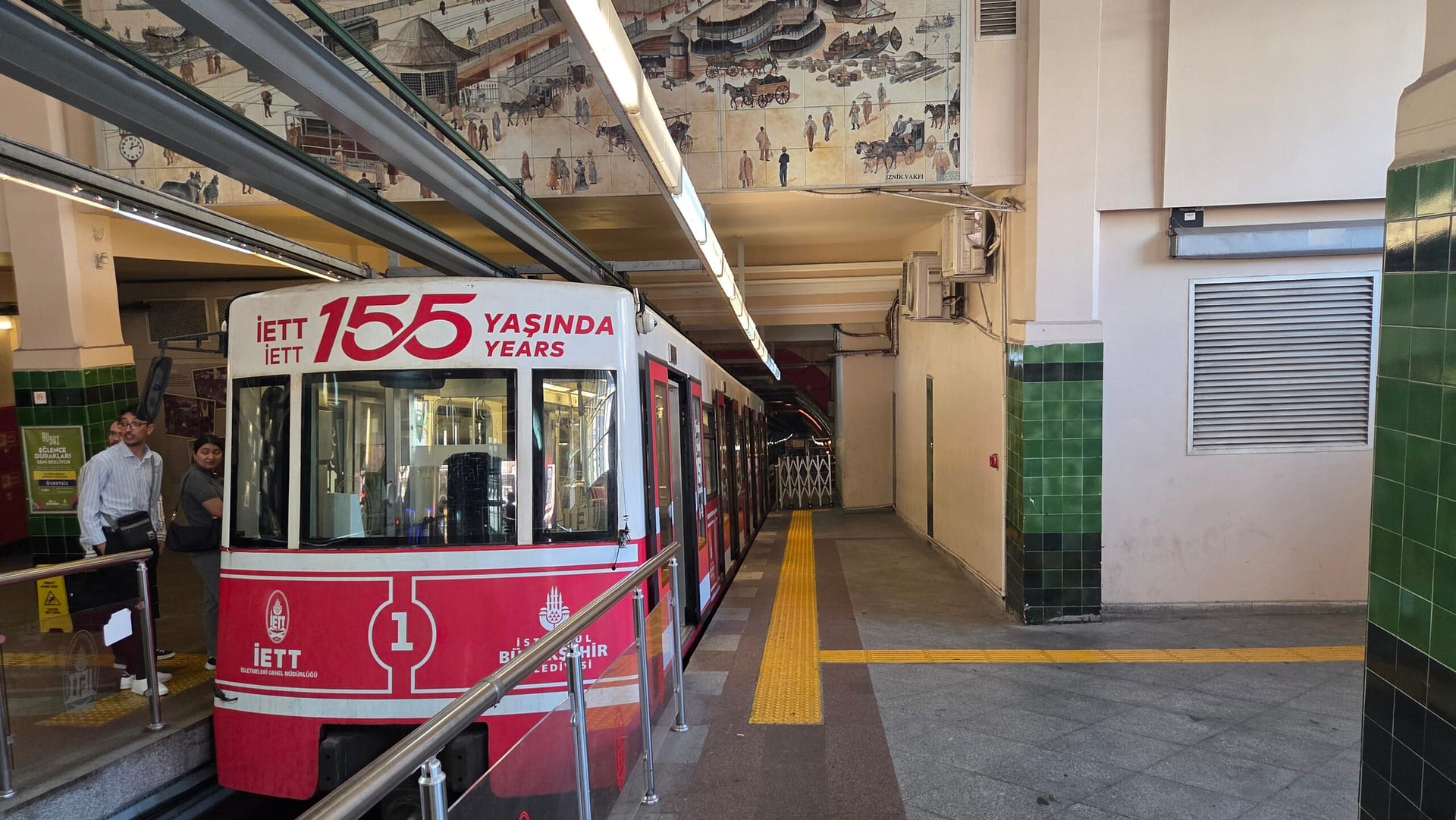
Once in the city, the added layers begin, all of which paid for by the same Istanbulkart. There are, of course several subway lines. There are also several Tram lines running above ground through city streets. These modern and nostalgic trams mesh with funicular’s running underground up several of the steep hillsides of Istanbul from bottom to top.

Then there are the gondola’s with one running up Pierre Lotti Hill and another traversing east to west across Maçka Sanat Park.

The ferry system, as already mentioned, traverses the Golden Horn and Bosphorus. There are dozens, perhaps hundreds if you include private ferries, roaming all over the core waterways of Istanbul. It is an amazingly complex system with upwards of 5-10 ferries coming in and out of some of the busy stops like Üsküdar and Karaköy.

And of course, the bus system which seems to reach virtually every spot in Istanbul that isn’t already covered by all the other modes of transport.

We had the opportunity use each of these modes of public transporation during our visit except for the gondola which had a longer line than simply walking up the hill.

Funicular at Tünel in Galata

What We Didn't Like About Istanbul

We really enjoyed our time in Istanbul though, of course, there were things we didn’t enjoy so much. Top of the list is really all the smoking. People smoke everywhere in the city with few exceptions (thankfully metro, mosques and some indoor restaurants). Everywhere outside, all restaurants with outdoor seating, even within the Great Bazaar and Spice Bazaar you will find men, women, young and old smoking across the city. In many places there are simply so many people that you can’t easily avoid getting second hand smoke.

Next is the cost. If you enjoy visiting museums and major sights of a city, be ready for Istanbul. It has to be the most expensive city for these activities of any we have ever visited. Tickets often hit $30 to $50 per person. This is felt even more acutely due to the sheer volume of museums and related sights. There are dozens of them, often within a half mile radius. Two people can easily spend a couple hundred dollars a day just visiting a couple sights.

We also didn’t love the hills. Realistically we can’t complain about them, they come with the territory, but the hills are significant, especially in the summer heat and while lugging baggage. The funiculars do help, but they aren’t everywhere and the hills are unavoidable.

And then there were the escalators. Perhaps due to the hills, and perhaps trying to avoid artifacts, the metro is deep. Very deep. The metro system has lots of long, slow, escalators going down multiple levels to get to train platforms. Again, unavoidable, but not something we loved.

Finally the sidewalks, or lack of sidewalks. Like many cities around the world, especially those in Asia, sidewalks, when they existed, are often used for seating, dumpsters, and parking mopeds. This forces pedestrians to walk in the streets; a very common occurance. While there is remarkably little car traffic aside from the major roads, these narrow cobblestone streets go both ways and often have taxis and mopeds speeding up and down them.

In Summary, Too Much for One Trip, We'll Be Back to Istanbul

There is just so much to see in Istanbul. We feel like we barely scratched the surface. While we feel like we saw a ton over those 8 days, there is so much more to do in Istanbul, let alone the broader country of Turkey. Plenty more food to try, famous restaurants and sweet shops to visit, museums and fortresses. So we are holding onto our Istanbulkarts with the expectation that we will return sometime in the not too distant future.

Soaking Up the View and the Breeze at Maidens Tower

Leave a Reply

Your email address will not be published. Required fields are marked *